MFTV
How open-source Bitcoin mining is changing the game
Bitcoin is, critically, an open-source project—with most of the development community building on Bitcoin in an open-source way.
If Bitcoin's codebase were not open-source, it would no longer be permissionless, trustless, or censorship resistant. Its position as "cypherpunk" money is firmly dependent on that fact that anyone can find, review and use its code.
The mining industry, however, typically operates with a different attitude. A small handful of companies make all Bitcoin miners—including chips, firmware, hardware, etc—with all information about how these machines work behind a heavily guarded wall.
In this episode of MFTV, Skot, creator of the first fully open-source ASIC (BitAxe) and boardmember of the 256 Foundation, sits down with Isabel Foxen Duke to share how the open-source mining revolution is growing—and why the mining industry is poised for "absolutely vertical growth" as its tech stack opens up for the world to build on.
Watch more
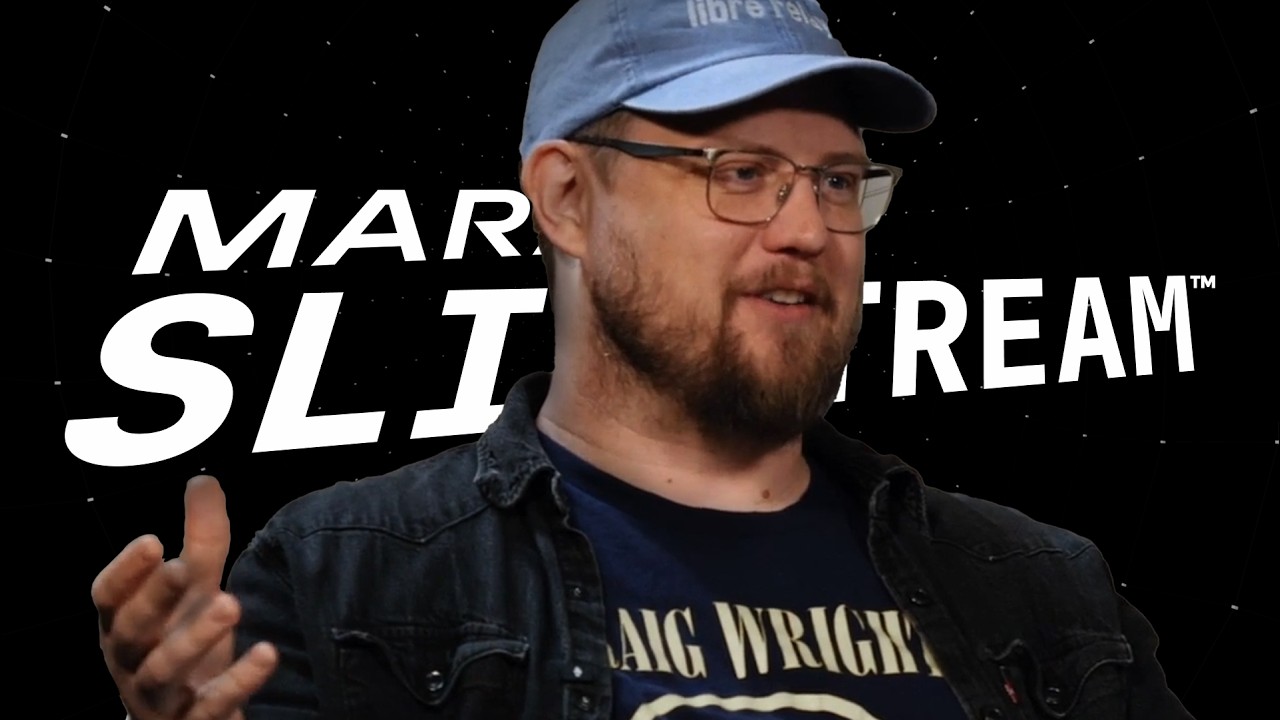
Breaking Down Bitcoin Mempool Policy and Slipstream | PETER TODD
In honor of Peter Todd’s recent appointment as lead maintainer of MARA Slipstream, Isabel Foxen Duke sits down with the veteran Bitcoin Core contributor to explore Slipstream’s unique role in the Bitcoin ecosystem — and the role of private mempools in R&D.
Tracing a line from early Replace-by-Fee (RBF) testing to modern experimentation with Quantum Safe Bitcoin, Todd breaks down how the use of private mempools has historically fueled protocol innovation.
The episode covers the technical nuances of the Taproot annex, the computational hurdles behind optimal block packing, and his longstanding views on the use of Bitcoin for data availability.
TIMESTAMPS:
🎙️ 01:45 The 10-year journey to get full RBF enabled on Bitcoin Core
🔓 05:09 Why Libre Relay relaxes standardness rules for non-standard transactions
🛠️ 06:40 Explaining version numbers, CSV, and relative time locks
📜 08:07 Why the Taproot annex is Peter's favorite standardness rule to bypass
🏎️ 10:11 How the Lightning Network actively depends on arbitrary data publication
🌐 12:54 Why the battle over DA is a "play fight," not a war
👀 16:00 The origins of OP_RETURN and early DA limits
⚡ 19:19 Pre-inscription data use cases including Open Timestamps
🎲 24:36 Why optimal block packing presents computational hurdles
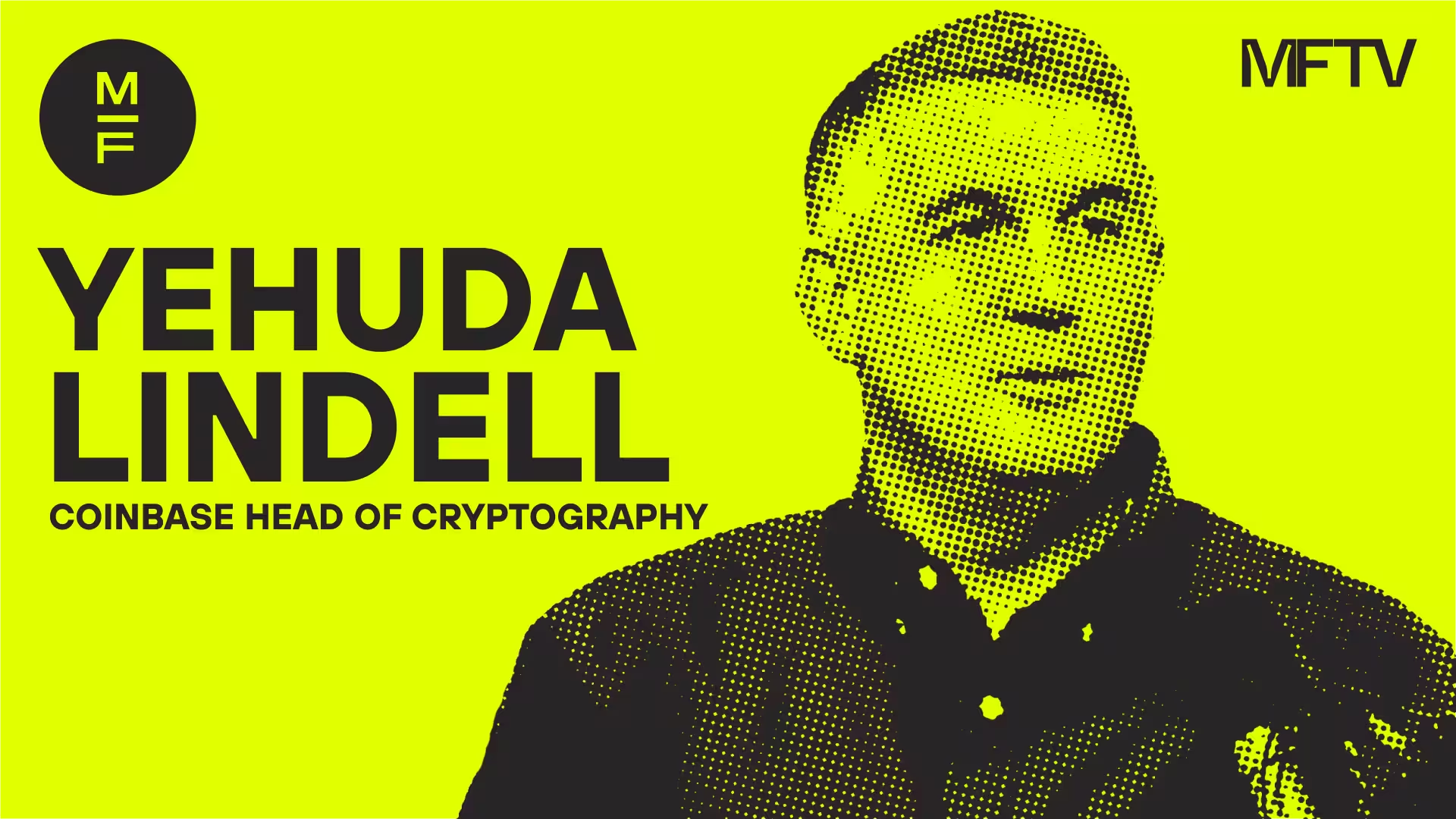
Coinbase's Plan for Post-Quantum Custody | YEHUDA LINDELL
Discussions surrounding Bitcoin’s path to quantum resistance are often framed around perspectives from protocol developers and academic researchers. However, Coinbase’s Head of Cryptography, Yehuda Lindell, brings the vital perspective of institutional custodians that operate on the front lines of execution.
Safeguarding roughly $250B in digital assets, Coinbase has built its core custody architecture around Multi-Party Computation (MPC). Yet significant operational hurdles remain, as the post-quantum signature schemes being considered for Bitcoin—such as hash-based signatures—could be incompatible with MPC, forcing custodians to alter their core security models.
In this episode, Yehuda sits down with MARA Foundation’s Isabel Foxen Duke to outline Coinbase’s internal roadmap toward post-quantum readiness for Bitcoin, the role of AI in defensive security operations, and mechanisms like programmable Hardware Security Modules (HSMs) designed to maintain enterprise operational security across potential protocol transitions.
TIMESTAMPS:
⏳ 00:56 — When Coinbase started preparing for a post-quantum world
📜 03:19 — Coinbase’s 4-pillar post-quantum strategy document
🤯 08:25 — Why Scott Aaronson changing his mind was a tipping point
🏦 14:02 — The role of custodians in protocol-level upgrades
🔐 22:39 — Multi-Party Computation (MPC) vs Multi-sig
🔑 26:11 — Managing employee keys without on-chain transactions
🤖 33:11 — AI's role in security and formal code verification
⚙️ 36:15 — The technical challenge of quantum-upgrading MPC
⚖️ 37:59 — Lattices, hash-based signatures, and efficiency tradeoffs
🛡️ 47:19 — The programmable HSM backup plan
🔀 55:08 — Why hybrid signature schemes are the optimal solution
🕵️♂️ 59:22 — Publicly verifiable backups and zero-knowledge proofs
💪 1:01:27 — Why cryptography will survive quantum computing
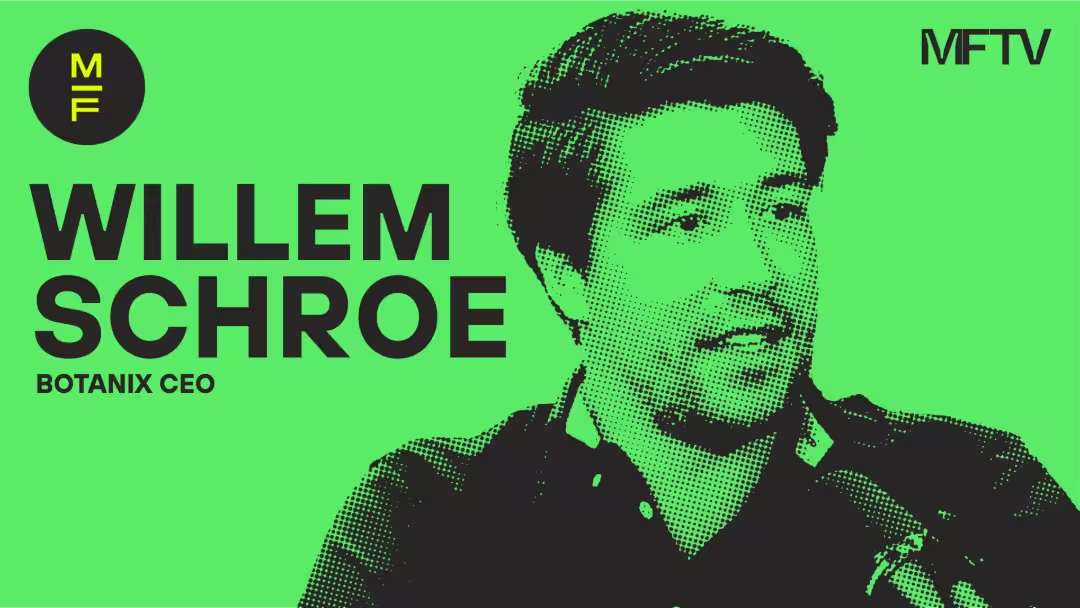
The Problem with Bitcoin DeFi | WILLEM SCHROE
Botanix Labs spent years building Spiderchains, one of the more promising Bitcoin layer-2 architectures released during the “Bitcoin Season II” boom. Although it ran for over a year with 100% uptime across 16 node operators, the team ultimately decided to shut down the project earlier this summer, sharing that market forces in Bitcoin DeFi didn’t support the project on the timeline they’d hoped.
"You come to the conclusion that your own vision of how a future should look … might not be aligned with where the market and the world is at this moment."
While the bull market may be back for Bitcoin as a store-of-value asset, the future of payments and Bitcoin DeFi use-cases is still very uncertain. Head of MARA Foundation Isabel Foxen Duke sits down with Botanix CEO Willem Schroe to share his candid perspective on “what happened” to Bitcoin DeFi — and its implications for the network long-term.

Post-Quantum Rescue Protocols | TADGE DRYJA
A known quantum skeptic, Lightning co-author Tadge Dryja still believes the threat is “worth being prepared for.”
Like other quantum skeptics, he notes that a classical break in elliptic-curve cryptography could potentially outpace quantum — making cryptographic hardening worthwhile regardless of quantum advancement.
That said, Tadge takes a realistic view of migration, noting that many users simply won’t move their coins to addresses with harder signatures in time, regardless of a cryptographic upgrade to the protocol.
“Rescue protocols” — that is, mechanisms designed to protect vulnerable funds after a cryptographic break — will, in his view, be an important part of Bitcoin’s contingency plan.
With proposals like "Lifeboat" and, more recently, "Lifejacket," Tadge has been pushing this area of research forward, receiving Maelstrom Fund's 6th Bitcoin development grant to continue the work.
In this interview, Tadge sits down with Head of MARA Foundation Isabel Foxen Duke to discuss rescue protocols — and, ultimately, how technology could help solve Bitcoin’s highly controversial “abandoned coins” problem.
Shout out to director of Blockstream Research Jonas Nick in this interview as well.
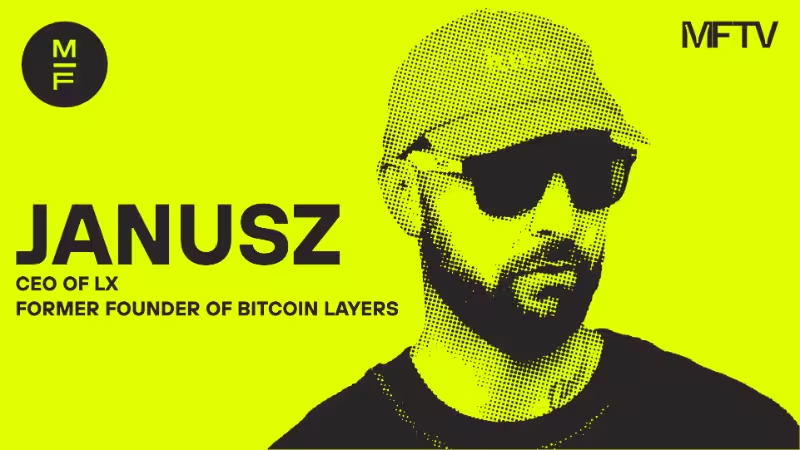
Bitcoin Privacy Done Right | JANUSZ
CEO of LX and former founder of Bitcoin Layers, Janusz, joins Head of MARA Foundation Isabel Foxen Duke to discuss how private payments could work on Bitcoin through zero-knowledge proofs, what the recent Zcash bug reveals about the risks, and why he sees avoiding KYC as the true starting point for privacy.
MORE ON MFTV WITH JANUSZ →
- How zero-knowledge proofs could bring private payments to Bitcoin, and the trade-offs they require
- Why he argues blockchain privacy starts with avoiding KYC
- What the recent Zcash bug reveals about the risks of these systems
- The state of the Bitcoin L2 ecosystem after the hype
Inside Unchained's Coldcard Emergency Response | UNCHAINED COFOUNDER
Since the Coldcard exploit first was exposed, nearly 9000 bitcoin (≈$500M) have been moved out of vulnerable Coldcard multisig wallets through MARA's Slipstream — with the largest majority coming from clients of the collaborative custody firm Unchained.
Unchained co-founder and CSO Dhruv Bansal walks Head of MARA Foundation Isabel Foxen Duke through how the response came together — including:
- Why multisig users faced a different risk than single-signature holders
- How Slipstream’s private mempool shielded vulnerable wallets
- and how security practices for users and builders will have to change to prevent future exploits
Investor Sentiment on Bitcoin's Quantum Transition | BLACKROCK'S WILL SU
According to Director of Research for Black Rock Digital Assets, Will Su, uncertainty around advances in quantum computing may be the biggest unanswered question facing prospective Bitcoin investors today.
He speaks with Head of MARA Foundation Isabel Foxen Duke in this episode — sharing how Black Rock thinks about quantum risk, how their clients are responding to quantum advancements, and what Bitcoin developers can do to preserve investor confidence as this technology evolves.
MORE ON MFTV WITH BLACK ROCK →
- How BlackRock evaluates risks associated with Quantum Computing
- How investors are pricing these risks and effects on adoption today
- What investors want to see from developers to feel comfortable going forward
- How BlackRock views the "quantum timeline" and developers' race against the clock
Bitcoin Mining and the Race for AI Power | FRED THIEL
"You can't do AI, HPC, or Bitcoin without electrons. Acquire electrons, then generate maximum value per electron."
MARA is one of the largest Bitcoin miners in the world, and it’s now moving into the energy and AI/HPC infrastructure territory the whole industry is racing for. What happens to Bitcoin mining when the race for AI power is quickly gaining popularity?
In his second appearance on MFTV, Fred rejoins Head of MARA Foundation Isabel Foxen Duke to explain what's driving that race. AI inference has skyrocketed demand for power, and the bottleneck is energized land — places where the electrons are already flowing.
Fred also lays out MARA's position: a power portfolio few can match, a partnership with Starwood Digital Ventures (a large-scale data center operator with deep hyperscaler and financing experience), and an in-house team spanning digital infrastructure operations, energy, and capital markets.
Bitcoin mining, meanwhile, becomes the load that monetizes power the moment it switches on. A conversation about energy, AI, and how the assets a Bitcoin miner spent years accumulating map onto the most contested market in tech.
Cynthia Lummis on the Future of Bitcoin Policy in America
Few lawmakers have done more to put Bitcoin on the map in American politics than Senator Cynthia Lummis.
At a pivotal moment for digital asset policy in Washington — and following her recent announcement that she does not intend to seek re-election — Sen. Lummis joins MARA Foundation’s Isabel Foxen Duke for a conversation on the future of Bitcoin in the United States and the political battles still ahead.
In this inaugural episode of MARA Foundation TV (MFTV), Lummis discusses the path forward for crypto market structure legislation in the U.S., what’s needed to get the CLARITY Act across the finish line, and how policymakers may overcome potential resistance from the banking industry.
The conversation also explores our prospects for a federal Strategic Bitcoin Reserve, the importance of protecting Americans’ rights to self-custody, safeguards for Bitcoin builders and developers, and who may carry the torch for Bitcoin policy leadership in Washington after Lummis’ retirement.
Welcome to the very first episode of MFTV 💫

Fred Thiel on Global adoption, Quantum preparedness, and the future of Bitcoin’s security budget
Following a series of strategic acquisitions in the energy and AI/HPC infrastructure spaces — MARA recently reaffirmed its long-term commitment to Bitcoin with the launch of the Bitcoin-focused MARA Foundation
MARA CEO Fred Thiel explains why the company — which consistently ranks among the world’s largest Bitcoin miners — believes it has a “unique obligation to protect and nurture the health of the protocol.”
In this special episode of MFTV, Head of MARA Foundation Isabel Foxen Duke sits down with Fred to discuss the Foundation’s mission, its long-term priorities, and the key issues it's committing to support.
The conversation explores Fred’s perspective on some of Bitcoin’s biggest long-term challenges and opportunities, including:
- The potential impact of quantum computing — and how Bitcoin is preparing
- How institutional adoption could shape Bitcoin governance and culture over time
- Mining use cases that can support a sustainable Bitcoin security budget
- Global and domestic catalysts for Bitcoin adoption
- Bitcoin adoption in the Global South and its role as a freedom-preserving technology
The Role of Miners in Bitcoin Political Advocacy with Jayson Browder
MARA SVP of Government Affairs Jayson Browder shares the unique role Bitcoin miners — especially public mining companies — play in advocating for Bitcoin in American politics.
This interview offers a rare look into how public Bitcoin companies coordinate in Washington, prioritize policy initiatives affecting both industry and retail users, and advocate for pro-Bitcoin legislation at every level of government.
Jayson sits down with MARA Foundation Head Isabel Foxen Duke to discuss:
- Advancing positive tax policy for Bitcoin users (e.g. de minimis exemptions) and miners (e.g. removal of double taxation)
- The impact Bitcoin public companies are making through the BitcoinVoter initiative
- The two biggest challenges facing pro-Bitcoin lobbyists today
- The Bitcoin education gap among American politicians — and how the industry is working to close it
A fascinating conversation for anyone who wants to understand what the largest Bitcoin companies are doing behind the scenes to advance pro-Bitcoin policy in America — and ultimately around the world.
Community-Owned Internet & Bitcoin Circular Economies | OBI NWOSU CEO of Fedi
More than 3 billion people around the world still lack reliable internet access — with many forced to spend huge portions of their income just to get online.
Obi believes Bitcoin fixes this.
Through SateNet, communities across Africa are deploying locally owned satellite internet infrastructure — paid for and sustained with Bitcoin.
The result:
- Costs drop dramatically
- Profits stay in the community
- Lightning & Fedimint infrastructure gets deployed locally
- and people begin saving sats naturally through everyday economic activity
This is one of the most compelling real-world Bitcoin adoption models we’ve seen

Bitcoin Isn't as Private as You Think | with Matt Odell
Perfect pseudonymity your entire Bitcoin life. One KYC mistake, and anyone can track every transaction you've ever made — today or in 10 years.
Matt Odell, founder of Ten31, breaks down why financial surveillance doesn't just target the powerful — and why anyone leaving a digital trail is exposed.
In this episode, he sits down with Isabel Foxen Duke to discuss why financial privacy is a prerequisite for wealth, and why one simple change to how you use Bitcoin could substantially improve your privacy today.
Miner-Aligned Scaling Solutions for Bitcoin | PAUL SZTORC
CEO of Layer Two Labs, Paul Sztorc, first proposed the Drivechains upgrade (BIP300/301) to enable Bitcoin-native Layer 2s that are trustless and economically aligned with miners.
Today, Paul joins Head of MARA Foundation Isabel Foxen Duke to explain why he believes most current thinking around Bitcoin scaling—including Lightning—is fundamentally misguided, and why many proposed L2s will never generate enough value for Bitcoin's long-term security budget.
We also dive into the political history of Bitcoin soft forks—from SegWit to Taproot—what needs to change in the BIP process, and why Paul believes mining pools, not just Core developers, should play a much larger role in Bitcoin governance.
A fascinating conversation on Bitcoin scaling, miner incentives, governance, and one of the ecosystem's most debated upgrade proposals. Whether you agree with Paul or not, his arguments are among the most consistent—and provocative—in the space.
Quantum Resistance for Bitcoin: Really Necessary? | Brandon Black
"Quantum computing has been 10 years away — or five years away, depending who you ask — for decades."
Brandon Black (Rearden Code) is a Bitcoin developer known for his work on protocol proposals like APO, CTV, and MuSig2 — and one of the loudest voices arguing that quantum urgency in Bitcoin is overstated.
In this episode, Brandon joins BIP-360 co-author and MARA Foundation Head Isabel Foxen Duke to break down the real difference between hardware and software breakthroughs in quantum computing, why a working quantum computer is likely much farther away than people think, and why a new theory called rational quantum mechanics could mean breaking Bitcoin's encryption isn't just difficult — it might be physically impossible.
Bitcoin in the Language You Dream In | Dulce from Librería de Satoshi
After struggling to find Bitcoin educational materials in her native language, Mexican developer Dulce Villareal launched Librería de Satoshi to make Bitcoin education accessible to Spanish-speaking students in the "language they dream in."
This effort eventually expanded into B4OS—a program that's trained more than two dozen Spanish-speaking Bitcoin Core contributors to date.
In this episode of MFTV, @Dulce_xyz sits with host Isabel Foxen Duke to discuss:
- Why access to Bitcoin education in non-English languages is essential to the long-term decentralization of the network
- How language barriers can quietly concentrate influence among a small subset of developers and builders
- Why Bitcoin's long-term success depends on arming builders and users everywhere—not just those who speak English — with effective user and technical education

How Bitcoin is Defending Against the Quantum Computing Threat (with Alex Pruden)
In the last year, quantum resistance has become one of the most actively debated topics in Bitcoin technical circles, with growing calls for developers and cryptographers to address potential threats to Bitcoin's signature schemes before they become urgent.
Much of this renewed attention has been driven by advances in quantum computing hardware, alongside improved estimates for the resources required to run attacks against Bitcoin's underlying cryptography.
In this episode of MFTV, Project Eleven CEO Alex Pruden breaks down these developments, what they mean for Bitcoin's quantum timeline, and why he believes the recipe for panic isn't too much attention on quantum—it's too little.
Get insights from Bitcoin leaders on governance, mining, security and tech.